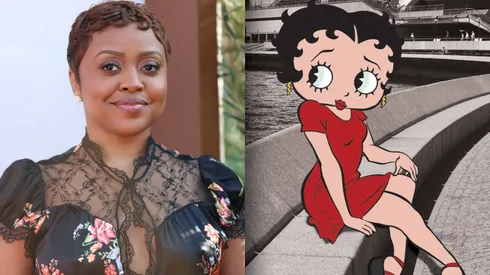
Long before Hollywood learned to build cinematic universes out of nostalgia, Betty Boop was already a phenomenon — a flirtatious black-and-white apparition born from jazz clubs, depression-era escapism and the restless imagination of animator Max Fleischer.
Now, nearly 100 years after her debut, the character is returning to the screen through a new feature film developed by Quinta Brunson, whose involvement signals something more ambitious than a simple reboot.
What Is Quinta Brunson’s Betty Boop Movie Actually About?
Quinta Brunson’s new Betty Boop project is not a traditional remake of the classic cartoon — it’s a feature film about the creation of Betty Boop herself. According to the official synopsis released this week, the movie will explore the rise of Betty Boop through the eyes of animator Max Fleischer, examining how one of America’s first cartoon superstars slowly took on a cultural life beyond her creator’s control.
The project is being developed by Brunson through her production company Fifth Chance Productions alongside Erin Wehrenberg and Mark Fleischer, the grandson of Betty Boop creator Max Fleischer.
Rather than focusing purely on nostalgia or modernizing the character for a younger audience, the film appears designed as a hybrid of Hollywood history, artistic obsession and animation mythology.
Entertainment Weekly reported that the story will specifically examine the “creative and commercial pressures” surrounding Betty Boop’s explosive popularity during the 1930s, when the character evolved from a surreal cartoon flapper into one of the most recognizable figures in American entertainment.
That angle instantly separates the film from previous failed attempts to revive Betty Boop. Over the last several decades, Hollywood repeatedly tried — and failed — to launch large-scale Betty Boop adaptations, including canceled MGM and Sony projects, television revivals and live-action hybrid concepts reportedly linked at one point to Lady Gaga.
What also makes the project especially interesting is the timing. Betty Boop’s earliest appearances officially entered the public domain in the United States in 2026, reopening conversations around the character’s complicated cultural legacy and inspiring everything from prestige adaptations to low-budget horror films.
Brunson herself described Betty Boop as a character with a “quiet but undeniable impact on culture for nearly a century,” adding that conversations with the Fleischer family convinced her there was “a much deeper story to tell.”