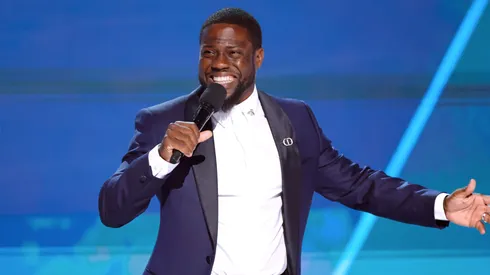
To look at Kevin Hart today, on his 47th birthday, is to look at a masterclass in modern branding. He has achieved a level of fame that transcends show business; he is a corporate entity, a venture capitalist, and an arena-selling rock star wrapped in a high-energy, self-deprecating package. Yet, the machinery behind his global success is deeply rooted in a singular, old-school word: hustle.
Long before he was commanding corporate boardrooms or headlining global streaming events, Hart was a struggling comic trying to find his voice in an environment that didn’t hand out participation trophies. Understanding how he became one of the biggest stars on the planet requires looking beyond the Hollywood marquee and examining the grit, the early failures, and the revolutionary business strategies that defined his journey to the top.
The Crucible of ‘Lil Kev’ and the Chicken Wing Incident
Every empire has an origin story rooted in struggle, and Hart’s began in the unforgiving comedy clubs of the late 1990s Northeast circuit. Performing under the stage name “Lil Kev,” a young Hart faced intense apathy from audiences. The lowest point came during a notoriously brutal set where an audience member threw a piece of fried chicken at him. Instead of quitting, Hart treated these early humiliations as an artistic crucible. He realized that to survive, he had to stop trying to imitate comedy legends like Chris Rock or Eddie Murphy and instead look inward, using his real life as his primary weapon.
Nancy Hart’s Blueprint: Turning Vulnerability into Currency
The turning point in Hart’s career came when he stopped running from his insecurities and started weaponizing them. Raised by his formidable single mother, Nancy Hart, who instilled in him a rigid sense of discipline and a relentless work ethic, Kevin learned to navigate a chaotic childhood by laughing first. By the time he released his breakthrough specials, I’m a Grown Little Man (2009) and Seriously Funny (2010), he had mastered the art of self-deprecation. He openly joked about his height, his fear of the dark, and his family dysfunction. By beating the audience to the punchline regarding his flaws, he established an instant, deeply empathetic connection with viewers, transforming perceived weaknesses into his greatest commercial assets.
The Rock Star Real Estate of Stadium Stand-Up
While most comedians view theaters as the peak of a stand-up career, Hart saw a completely different ceiling. He revolutionized the economics of live comedy by treating his tours like stadium rock events. This strategy culminated in his historic 2015 What Now? tour, where he sold out Lincoln Financial Field in his hometown of Philadelphia, performing to over 53,000 people in a single night. No comedian had ever utilized giant LED screens, cinematic introductory films, and arena-level pyrotechnics on that scale. By proving that comedy could command the same real estate as a stadium concert, Hart changed the financial paradigm of the industry forever.
Hartbeat Ventures: The Creation of a Content Factory
What separates Hart from almost every other elite comedian of his generation is his transition from an employee to an owner. He systematically built an ecosystem where he controls the production, distribution, and financing of his content. Through his investment arm, HartBeat Ventures, and the expansion of his media company, Hartbeat, he secured massive venture capital funding to build a multi-platform media juggernaut. Today, in 2026, his fingerprints are across every major media landscape, commanding long-term first-look deals with Netflix, highly-rated channels on SiriusXM, and original programming for Peacock and Audible. He effectively removed the Hollywood middleman, ensuring that he owns the masters of his own creative output.
The 2026 Roast and the Longevity of ‘Acting My Age’
Even at 47, an age where many veteran comedians settle into comfortable retrospectives, Hart remains firmly in the trenches of live performance. His current position in the cultural zeitgeist was perfectly encapsulated this past May at the Kia Forum, where The Roast of Kevin Hart streamed live globally on Netflix as the centerpiece of the 2026 Netflix Is A Joke Festival. Hosted by Shane Gillis and featuring a brutal, hilarious lineup of his closest peers, the event was a celebration of a man secure enough in his legendary status to let the world tear him apart. Paired with his ongoing, completely phone-free Acting My Age global tour, Hart enters his late 40s proving that while his business profile has evolved, his heart still belongs to the raw, unfiltered energy of the microphone.