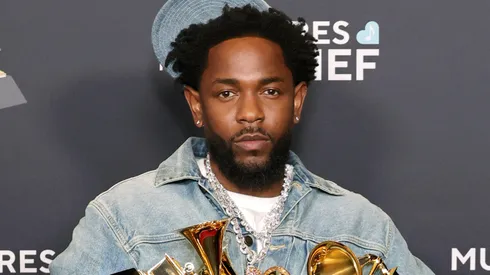
The conversation around Kendrick Lamar Duckworth has long outgrown the standard boundaries of hip-hop tier lists.
He enters his late thirties in a position of complete cultural sovereignty. Fresh off a historic wave of accolades that saw his surprise masterpiece GNX sweep the 2026 Grammy Awards—taking home Best Rap Album while the SZA-assisted smash “Luther” secured Record of the Year—Kendrick is no longer evaluated merely as an elite master of ceremonies. He is treated as one of the most vital, rigorous novelists in contemporary American letters.
To celebrate his birthday, we are stepping away from the charts to analyze the specific, brilliant narrative mechanics that allowed Kendrick to permanently alter how stories are told through music.
The Cohesive Album as a Literary Novel
While the modern streaming ecosystem heavily rewards artists who drop bloated, playlist-friendly collections of disconnected singles, Kendrick has spent his entire career stubbornly defending the sacred art of the long-form concept album. He does not design records to be shuffled; he constructs them to be read from cover to cover.
Each major entry in his discography operates under a distinct, rigid framing device. good kid, m.A.A.d city is explicitly subtitled as a “short film,” utilizing a non-linear chronological timeline to document a single, pivotal day of teenage survival. To Pimp a Butterfly functions as a dense, multi-layered sociological essay, structured entirely around a recurring spoken-word poem Kendrick is reading to a manifestation of Tupac Shakur. By treating the album format as a singular, unbreakable canvas, he forces the listener to engage with his music with the same intellectual stamina required for a high-end literature seminar.
The Chameleon Pen: Multi-Perspective Vocal Shifting
One of Kendrick’s most formidable storytelling weapons is his unparalleled vocal elasticity. He doesn’t just write characters; he physically inhabits them through radical, intentional shifts in his pitch, cadence, delivery, and timbre.
Instead of relying on a uniform rap voice, Kendrick routinely alters his vocal frequency to signal specific psychological states, ages, or entirely different human beings. He can seamlessly transition from the high-pitched, hyperventilating panic of a teenager staring down a gun barrel, to the cold, detached rasp of a street corner pragmatist, to the cracked, weeping register of a man confronting deep-seated trauma. This chameleonic vocal mapping allows him to execute complex internal dialogues within a single verse, effectively turning his microphone into a one-man ensemble theater company.
The Weapon of the Unreliable Narrator
Standard hip-hop tropes frequently require the protagonist to be an invincible, flawless superhero—the ultimate hustler, the smartest gangster, or the untouchable titan. Kendrick completely dismantled this dynamic by introducing the concept of the deeply flawed, unreliable narrator to the forefront of the genre.
He consistently refuses to paint himself as an unproblematic savior. Instead, Kendrick’s stories are fueled by raw human hypocrisy, internal contradictions, and moral blind spots. He openly documents instances of his own cowardice, his battles with materialism, his lapses in judgment, and his struggles with ego. By laying bare his own psychological vulnerabilities and spiritual crises, his storytelling achieves a profound level of emotional realism that makes his eventual triumphs feel earned, human, and deeply earned.
Sonic Realism: The Architecture of Audio Field Recordings
To bridge the gap between abstract lyricism and cinematic reality, Kendrick treats sound design with the scrutiny of a Hollywood film director. His albums are famous for their dense, meticulous integration of “found audio”—real-world voicemails, street-level field recordings, home videos, and candid family conversations.
These audio snippets act as the narrative mortar that holds his musical concepts together. Whether it is his mother frantically calling him to return the family van, his cousin reading biblical scripture over a telephone wire, or the echo of tap-dancing shoes providing the rhythmic heartbeat to a heavy emotional breakthrough, these sonic artifacts ground his fiction in an unshakeable real-world truth. They transform abstract musical arrangements into living, breathing acoustic documentaries.
The ‘GNX’ Era: A Masterclass in Community Historiography
His triumphant latest chapter, GNX, demonstrated that turning 39 hasn’t diluted his narrative edge in the slightest; it has simply made his focus more clinical. The album flipped the script on his previous, highly insular psychological explorations by serving as a brilliant piece of community historiography.
Rather than centering the narrative entirely on his own perspective, GNX saw Kendrick step back to let a handpicked collective of emerging Los Angeles voices paint a vivid, multi-generational portrait of the modern West Coast. Backed by the rich, G-Funk-infused orchestral production of Sounwave and Jack Antonoff, the record proved that Kendrick’s ultimate storytelling gift isn’t just his ability to document his own soul—it’s his unparalleled capacity to act as a brilliant mirror for the culture surrounding him.