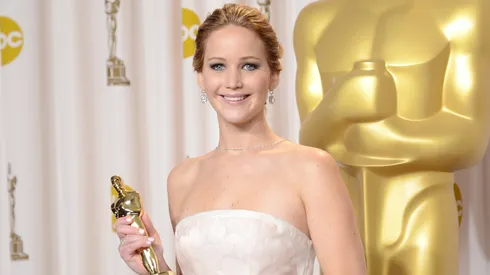
On March 3, 2013, the Dolby Theatre held its breath as 22-year-old Jennifer Lawrence climbed the steps to accept the Academy Award for Best Actress for her performance in Silver Linings Playbook. The moment was instantly etched into Oscars lore.
Thirteen years later, that win still feels like a pivot point in modern Hollywood. It crystallized the appeal of a performer who could oscillate between raw vulnerability and razor-sharp wit, anchoring prestige drama while carrying blockbuster weight.
The night Jennifer Lawrence became Hollywood’s uoungest powerhouse
When Jennifer Lawrence won the Academy Award for Best Actress at the 85th Academy Awards in 2013, she was just 22 years old—one of the youngest performers ever to claim the prize in the category.
Her portrayal of Tiffany Maxwell in Silver Linings Playbook, directed by David O. Russell, was electric: volatile yet tender, comedic yet wounded. Acting opposite Bradley Cooper, she delivered a performance that refused to soften its edges, embodying grief, desire and instability with a kind of fearless clarity rarely seen in someone so young.

The win capped off an extraordinary 18 months. By the time her name was called at the Academy Awards, she was already a household name thanks to her role as Katniss Everdeen in The Hunger Games.
She had moved seamlessly between blockbuster spectacle and intimate character study—an increasingly rare feat in an industry that often demands actors choose between box-office draw and awards credibility. Her Oscar didn’t just validate her range; it confirmed she could command both worlds at once.
That night is still remembered for its unscripted humanity. As she made her way to the stage at the Dolby Theatre, she tripped on the steps, then laughed it off with disarming candor.
The moment went viral, reinforcing the public image that had begun to form around her: talented but unvarnished, glamorous yet refreshingly self-aware. It was a cultural flashpoint in the early social media era, when authenticity was becoming Hollywood’s most valuable currency.
Thirteen years later, the resonance of that Oscar lies not only in the trophy itself but in what it represented. Lawrence’s win signaled a generational shift: a leading actress who could be messy, funny, politically outspoken and still undeniably bankable.