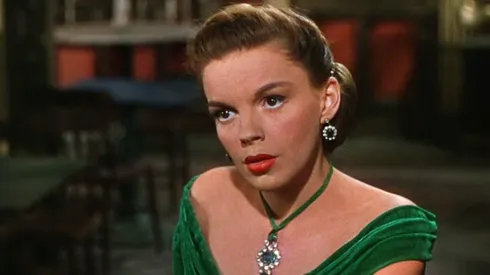
There is a distinct difference between a movie star and a cultural icon. Movie stars capture the zeitgeist of a specific decade; cultural icons capture the very soul of the human experience. Judy Garland didn’t just sing and act—she bared her absolute soul on celluloid, inviting audiences into a shared space of profound vulnerability, unbridled joy, and deep-seated longing.
While history often fixates heavily on the tragic machinery of the studio system that exploited her, her true legacy is enshrined in the staggering artistic heights she achieved. Garland was a master technician of emotion, an accomplished dancer, a brilliant physical comedian, and a dramatic powerhouse who could command a scene with nothing but a trembling glance.
To celebrate her birthday today, we are skipping the tragic bios and turning on the screen to rank the 10 greatest and most definitive film performances of a true Hollywood titan.
1. Vicki Lester / Esther Blodgett in A Star Is Born (1954)
This is not just Garland’s greatest performance; it is widely considered one of the greatest performances in the history of cinema. Returning to the screen after being brutally cast out by MGM, Garland poured every ounce of her personal trauma, industry disillusionment, and raw genius into George Cukor’s tragic musical epic. From the blistering, one-take intimacy of “The Man That Got Away” to the agonizing dressing-room breakdown where she rails against the cost of fame, Garland delivered a masterclass in dramatic range. Her historic Oscar loss that year remains one of the Academy’s most egregious snubs.
2. Dorothy Gale in The Wizard of Oz (1939)
It is the performance that granted her cinematic immortality. At just 16 years old, Garland anchored a massive, unstable fantasy production with an unparalleled sense of emotional reality. Sitting in a sepia-toned barnyard and singing “Over the Rainbow,” she captured the universal adolescent ache for escape so purely that the song became the definitive cultural anthem of hope. Her performance earned her a special Juvenile Academy Award and created a character that remains a foundational piece of global pop culture.
3. Esther Smith in Meet Me in St. Louis (1944)
Directed by her future husband Vincente Minnelli, this glorious Technicolor masterpiece captured Garland at the absolute peak of her romantic, musical powers. Playing a vibrant young woman navigating family transitions at the turn of the 21st century, Garland grounded the nostalgia with genuine emotional high stakes. Her performance of “Have Yourself a Merry Little Christmas”—sung to a weeping Margaret O’Brien—is a devastatingly beautiful moment of comfort wrapped in quiet melancholy that still defines the holidays.
4. Irene Hoffmann in Judgment at Nuremberg (1961)
For anyone who foolishly believed Garland could only succeed inside the safe, stylized boundaries of the musical genre, Stanley Kramer’s courtroom drama was a shocking revelation. Stripped entirely of glamour, makeup, and music, Garland delivered a brief, shattering dramatic performance as a German woman terrified to testify about a past relationship that violated Nazi racial laws. Her trembling, panic-stricken breakdown on the witness stand earned her a richly deserved Best Supporting Actress Oscar nomination.
5. Alice Mayberry in The Clock (1945)
This deeply underappreciated wartime romance represents a massive milestone in Garland’s career: her very first completely non-singing dramatic role. Playing an everyday New York office worker who accidentally falls in love with a soldier on a 48-hour leave, Garland carried the entire movie on pure acting chops. She infused Alice with a quiet, tender, and incredibly realistic vulnerability that proved she didn’t need a three-piece orchestra to completely capture an audience’s heart.
6. Hannah Brown in Easter Parade (1948)
Pairing up with dancing legend Fred Astaire, Garland proved she could match the absolute best in the business step-for-step while delivering elite-tier physical comedy. Originally intended for Gene Kelly, the film was completely stolen by Garland’s impeccable slapstick timing. The definitive highlight remains the “A Couple of Swells” routine, where she willingly smudged dirt on her face, donned rags, and successfully out-charmed Astaire, showing her utter lack of vanity on screen.
7. Jane Falbury in Summer Stock (1950)
This film stands as a monumental testament to Garland’s sheer professionalism and resilience. Filmed during a period of intense personal illness and emotional exhaustion, Garland pushed through the production to deliver a delightfully warm, engaging performance as a conservative farm owner whose barn is hijacked by a theater troupe. The film climaxes with the iconic, late-addition “Get Happy” routine. Draped in a black tuxedo jacket and a tilted fedora, Garland delivered a vibrant, electrifying burst of pure star power that became one of the most famous musical numbers of all time.
8. Susan Bradley in The Harvey Girls (1946)
Garland headed out to the wild frontier for this quintessential, high-spirited MGM western musical. Playing a naive young woman who travels West to become a waitress at the historic Fred Harvey restaurants, she brought an infectious sense of determination and proto-feminist grit to the role. Leading the sprawling ensemble through the Oscar-winning anthem “On the Atchison, Topeka and the Santa Fe,” Garland radiated a pure, studio-era joy that defined the Golden Age of Hollywood.
9. Jenny Bowman in I Could Go On Singing (1963)
Garland’s final feature film performance is a deeply poignant, borderline uncomfortable piece of art. Playing a highly successful, erratic American concert singer traveling to London to reclaim her estranged son, the film functions as a meta-textual, semi-autobiographical mirror of Garland’s own chaotic life. The scene where her character delivers a frantic, emotionally raw monologue from a hospital bed isn’t just acting—it is a boundary-blurring look into the heart of a genius who spent her entire life giving everything she had to her audience.
10. Betsy Booth in the Andy Hardy Franchise (1938–1940)
You cannot fully understand the meteoric rise of Judy Garland without examining her electric, kinetic partnership with Mickey Rooney. Stepping into the wholesome world of Carvel as the multi-talented girl-next-door Betsy Booth, Garland served as the ultimate secret weapon for the franchise. Her effortless, rapid-fire banter and teenage vulnerability alongside Rooney birthed the quintessential “let’s put on a show!” musical subgenre, laying the groundwork for the massive superstardom that followed.